Tuesday, May 28, 2013

Experimenting or Avoiding Feeling: Journal Notes #112

Notes from my May 2013 Zhan Zhuang Training Journal. I train with The School of Cultivation and Practice which practices Wujifa zhan zhuang. (My current reflections are added in italics.) 

* Question: Why do I always turn a feeling into mechanics? I can get "the feeling" in class and think I practice it at home but somehow it transitions back into being mechanical because when I return to class and demonstrate what I've been practicing, then I'm told that I'm doing it too mechanistically; I've lost the feeling.
Answer: Armors are subconscious.
  1. In class, I take you through certain routines to get you to the emotional state where you feel safe and comfortable to open to your own feeling. There's certain music that anchors you to or helps you get in touch with feeling. There are certain methods of coaching and adjustments that get past your conscious defenses and bring more of your awareness into your body. How these elements are combined kind of depends on where you are in any given class. All these together help you find "the feeling".
  2. You also are wedded to your life habits, doing what you are expected to do. When some people have a heart attack or other traumatic life event where they fully realize their mortality, some of these folks lose the fear that kept them in their habits and then they feel free to live outside of the box of expectations they were in. I hope you can get out of that box before a traumatic life event.
  3. You're afraid to feel because to do so would fundamentally alter your data structured world.

* Question: Aren't you  being contradictory when you teach, "practice how I tell you to practice" and then turn around and say, "think for yourself and experiment."?
Answer:  First, you must build a baseline. Demonstrate the experiment. The problem is that people only practice for one hour and then do something else. There's no persistent focus. For example, I taught you how to practice with stretching the theraband. What did you do? You went home and "experimented" with using a stick. Your experiment was not to test the difference in fascial stretch felt between using theraband or using a stick. You simply jumped to using a stick because doing so engaged more muscle which is easier for you to feel.

However, what you did was not an experiment. You simply fell into an established pattern: AVOIDING EXPLORING DEEPER LEVELS OF FEELING! Not following an experiment designed to elicit feeling is a pattern of avoidance.

If an experiment is designed to open up something in you, and your pattern is to avoid feeling, then you won't do the experiment as designed but will avoid doing what you were told to do and will try doing anything else that fits your pattern and thereby doesn't elicit the targeted feeling.

It's O.K. to experiment as long as the focus of the experiment is maintained. I'm showing you the experiments I did that got results for me. If you run the same experiments, you should get the same results. If you deviate without first being able to demonstrate the results of the original experiment, then what you are doing is not an experiment. You have to understand the baseline.

* Question to me: Why aren't you maintaining your private practice journal? (Different from this summarized version of class notes.)
My answer: I did this for a while and then quit when I started touching on life stuff during stance. It's easy to practice when daily life is easy. It's difficult to practice when daily life is difficult. This is where I fall short and then complain that I don't "get it". It's almost like when I'm on the verge of change, then people, or "life" throw stuff at me to prevent  me from changing. My kung-fu is weak.

* Question: How can I discover my subconscious  resistance to feeling?  How can I discover my armors?
Answer: Experiment.

My response: But I don't want to because then I'd be responsible for my own progress.

Instructor: Exactly! And this is why so few people "get it". People generally want to mindlessly follow along. People who want to go further eventually encounter their armors and, like you, tend to get stuck there. You've got to experiment with your resistances, your armors. Notice your response.

* Here's an example of how to experiment eliciting different feelings. Remember, the mini-squatting exercise you learned last month? Do that now. (From stance position, arch your back which helps maintain kua-in, breathe out and squat down 3 inches, breathe in and rise up. Keep the angle of the pelvic tilt constant throughout.) Breathe deep into your pelvic floor. What do you notice?
Me: I can feel like the intra-abdominal pressure extending down a little into the top of my thighs.

Instructor: Sometimes you hit it (breathe deep and full enough) and sometimes you miss it (too shallow). Now experiment with tucking under and do the exercise. What do you notice? What's the difference?

Me: Tucking under pops out the kua. I can't feel the same feeling in the lower abdomen and tops of my thighs.

Instructor: Now go back to arched back and do a few mini-squats again. Now experiment with lifting up from the chest and do the exercise. What do you notice? What's the difference?

Me: It's like I'm trying to force a feeling of connection up the front but there's no that feeling in the lower abdomen and kua

Instructor: So one method gave you the feeling and two other methods blocked that feeling.

Further reading:
Introductory article explaining this "Journal Notes" series: Zhan Zhuang Training Journal
Previous article in this series: Too Tense for the Next Level: Journal Notes #111

Wednesday, May 8, 2013

Too Tense for the Next Level: Journal Notes #111

Notes from my April 2013 Zhan Zhuang Training Journal. I train with The School of Cultivation and Practice which practices Wujifa zhan zhuang. (My current reflections are added in italics.) 

* Once again, I've demonstrated my ability to make a feeling into something mechanical. Despite my practice over the last two weeks, somehow I've transformed that alive feeling in stance into a mechanistic set of rules. What is amazing to me is that I didn't even notice the process of this happening. I thought I was practicing the feeling that I learned and I thought I was improving.

* In class we had a long discussion about forearm alignment in zhan zhuang and how tension in the shoulder affects this alignment. Here are the key points I remembered.
  • Holding my hand in front of me with my elbow at my side, with palm up, the radius is the outer forearm bone and the ulna is the inner forearm bone. With palm down, these two bones cross each other. At a mid-way point, between palm up and palm down, that is, when the palm faces inward, the radius is roughly over the ulna.

  • Getting the forearms stacked one on top the other at mid-point is the neutral position. I can only know twist and spiral to the degree that I know neutral. Once I can feel-understand the neutral position, then my feeling-understanding of moving away from neutral, that is, twisting in either direction, will be amplified. If I am locked-in at the elbow or shoulder, then the neutral and the twist will be corrupted.

  • If I'm locked in the elbow, then forearms turn in one fashion. If unlocked at the elbow, then the forearms turn in a different fashion. If the shoulder locks the upper arm in one location, then the movement in the forearms bones has a limited range of motion. If the shoulder unlocks, allowing the upper arm to rotate slightly, this allows increased range of motion in the elbow where the radius and ulna attach which has the effect of allowing increased range of motion for the forearms. Event though we're talking millimeters in these adjustments, the effect is dramatic.

  • The purpose in working the forearm, upper arm, and shoulder alignment is to 1. discover and release any tensions that may be limiting the range of motion, and 2. to achieve optimal alignment for the transmission of intention and force from the hand through the shoulder.

* The problem with older folks (like me) trying to learn this level of gong-fu is that decades of life habits have established the length or shortness of muscles and tendons. This is what an older practitioner is fighting against to achieve improved posture. The somatic, physiologic resistance is "built in".

* When I observe myself in the mirror, my posture and alignment looks good to me. And I am reminded that this is so because I can only see as far as I can see.

* In class, I was demonstrating posterior-anterior pelvic tilts (tuck-untuck) and my instructor asked me if I could feel the stretch from my back into my pelvic floor. Could I feel the "pull" at my anus? Well, "no". We then talked about how I get stuck in a tense-relax loop. It's like I'm stuck in a loop of feeling a superficial level of relax and I'm not jumping out of that superficial, "known" level of relax to a more relaxed level of relax that's a deeper level of relax than the loop I'm in.

* I made a comment in class that stance practice has gotten really boring for me. I'd rather do anything else than stand! To which my instructor responded, "This could mean that you don't want to see the depth. You're only seeing superficially." This made me think that maybe I am superficial.

* In class, I learned an exercise that coordinated breathing with doing a mini-squat (2-3 inches movement only). Standing with alignment as if in stance, then arch the back as a beginning method to feel kua-in. (Tucking results in the kua popping out.) Squat down slightly on exhale and rise up slightly on inhale and try to feel how the intra-abdominal pressure extends into the kua on the inhale. I couldn't really do this as it turns out because of the remaining tension in my pelvic area. My upper thighs (at the kua) feel like concrete in comparison to my instructor's. The top of my femurs, the greater trochanters, need to rotate even further forward which means the back needs to loosen even more. (If I can un-arch my back and maintain kua in, then that's a good indicator of another level of relax. Both straightening the lower back and tucking can cause the kua to pop out if the back is not relaxed enough.) In addition to learning how much more I need to relax, I also realized that a certain level of "drop" or "sinking the weight" can be achieved with a certain amount of relax but this amount of relax is not enough to get the kua-in position that is needed. And to achieve that also comes with more dropping the weight.

* In doing a little "push hands", I learned that my brace has gotten really strong but that I'm using all muscle and not the internal strength, "relaxed while maintaining groundpath" feeling I'm looking for.

Further reading:
Introductory article explaining this "Journal Notes" series: Zhan Zhuang Training Journal
Previous article in this series: Feeling in My Eyes: Journal Notes #110
Next article in this series: - Experimenting or Avoiding Feeling: Journal Notes #112

Saturday, April 27, 2013

Feeling in My Eyes: Journal Notes #110

Notes from my March 2013 Zhan Zhuang Training Journal. I train with The School of Cultivation and Practice which practices Wujifa zhan zhuang. (My current reflections are added in italics.) There are no journal notes for February due to a combination of a class cancellation and my not attending due to working on my first book.

* Let me lead by saying that at the beginning of March I engaged an area of life I had long denied engaging. When I first decided to "go for it", I argued myself out of it. Interestingly, one conversation changed my mind and suddenly it was OK and I simply approached that area with curiosity and just like that, something noticeably shifted in my practice.

* I discovered through doing a squatting exercise (moving the torso up and down like a piston) that I still have tightness in my hips. The hip joint should be free so the pelvis can move freely up and down while maintaining the posterior of the pelvis on a vertical plane. In my case, I reach a point where the pelvis locks with the femur and tilts which then effectively transforms the lower back into the hip joint. A method to remedy this is to do mini-squats with a focus on keeping the pelvis vertical and gain control over the points where currently getting stuck.

* Really isolate the hip. Don't lift with the chest or back. Push the knees forward or backward. Exhale on down and inhale on up. The head will naturally rotate on a point under the ears according to the movement of the pelvis. Tucking means the abdominal muscles are contracting. If you tense the back to counter a tense front (to keep the torso straight), then you're locking and this kills the ability to feel into this area.

correct vs problematic hip movement

* Referring to pelvic movement, looking for a specific movement creates fascial stretch. If you can't get that movement, then you can't get that stretch.

* Question: Regarding the mini-squatting exercise, where I visualize myself as a piston and pelvis moves up and down pivoting on the hip joint...
Answer: Stop! Using a mechanistic model will help you understand points of structure but it will not help you understand connection. You are not a piston. Connective tissues don't function as rigidly as a machine.


* Hold a wooden dowel out in front of you with one hand and close your eyes. How long is the dowel? What sensory points are used to get a feel for its length? With a second person tapping the dowel further and closer to your hand, how do you determine if the tapping is further or closer? Next, the second person extends arm, palm facing  near end of dowel. Close eyes, touch dowel to your leg then try to touch other person's hand with end of dowel.
Are you able to do this? (Got close - touched the forearm, not the hand.)
What was the data you used to determine this? (Feeling, sensory).
What was the point of doing this exercise? (To use feeling data to figure out a goal.)
The principle is to use what you have and apply to your purpose without being distracted to get in the ballpark and refine from there.

* Think about building a house. Do you have a hammer? If not, then get a hammer. When you have a hammer can you build a house? No. You only have a hammer. Just because you have one tool doesn't mean you have the tools to build a house. With a hammer, you could build a boat dock. The same applies to other tools that are used to create structure. Let's say you get all the tools and build a structure, a house. Is this a home? No. A home is where life is. A home functions differently than a house. A structure is not a home until life is lived in it.

* Methods are like tools. They help you build and refine your structure. Through structure you add feeling, connection, and how your connective system responds to your intention. Feeling muscle stretch with structure is a first step. It's OK to feel muscle stretch because fascial stretch is kind of like this.

* Of course, fascia stretches with muscle but if your focus is on the muscle then you are only noticing a small section of fascial stretch.

* People hold onto too many tools (methods) and need to discern which tool to use and when as well as when to set the tool down.

* If you are now living in your home and you want to make an omelet, do you use your hammer? If your purpose is to enjoy cooking and eating breakfast, then the methods used to build structure are not useful. You need a new method. Understanding your purpose at the time helps you understand which methods to apply at that time.

* Consider the bigger frame but work in a small area.

* How do you assemble a jigsaw puzzle? First, look at the picture. Then from the jumble of pieces, look for recognizable pieces; corners and edges. You don't need the whole picture to assemble the edges, to construct the framework. After you got the frame, then you can divide or categorize pieces according to an area, for example, sky, water, shoreline, trees. Later you may realize you confused some sky and water pieces. As you refine your discernment, the differences between the similarities become more apparent. This discernment develops over time from working on solving that area of the puzzle.

* If you follow the principle, eventually you will connect all the pieces.

* Use structure to make structure clearer; to allow feeling through structure. Clear the blockages to feel the stretch. After you get the feeling of stretch, then you can play with structure. You can see modern architecture that diverges from normal, typical structures and yet are structurally sound.

* Do you see how scientific principles apply to developing internal connectedness? (Yes.)
Do you apply them in your practice? (No.)
Does this give you any ideas of what to apply? (Yes.)

* Compare the feeling in your eyes when you do the piston exercise (eyes are lifeless) to when you feel the stretch (eyes are open and alive).

* To achieve ease is not easy. You have to work hard to achieve ease.

* I tend to shut down (divorce myself from feeling) when I encounter emotional hurt and pain instead of staying alive and present and arguing and crying or whatever the body's response is in that situation. This is an area of the jigsaw puzzle I don't like to work on.

* From an electronics point of view, think of the signal to noise ratio. When the muscles are either too limp or too tense, this represents the noise (the unwanted or useless information) that is drowning out the signal (the useful information), the feeling of fascial stretch. You engage different circuits (methods) to reduce the noise and amplify the signal.

* I discovered my process at this point. I begin with structure (piston mini-squatting exercise), and then coordinate with breathing and pushing feet down and extending upward. I recognized where thinking kicks in. The feeling in my eyes changes. It's a subtle distinction yet, obvious. I discovered that I can use the feeling in my eyes as a bio-feedback device. I can use the feeling of body fullness as a bio-feedback device.

* What is different this time is that I "got it" with only verbal coaching; no manual adjustment! And I felt the difference and how I created the difference. Very exciting!

* I tend to rush to the method. How do I recognize where disassociated thinking kicks in? There's a different sensation when I'm feeling full in the movement vs when I'm trying to dissect and analyze what is happening. The feeling is there before the words form. It's pre-thought.

* I focus on defending against things I can't feel. This doesn't mean I don't want to feel. When I simply "do" and then run into a blockage and if I defend that blockage, then I'm protecting from something. For example, if I cry in stance, this is simply a reaction. It is what it is. It doesn't mean the emotion is associated with a cause or event. There's no need to search for a reason. It's OK to simply experience the emotion and let it pass.

* I discovered for myself an answer to a question I had asked long ago which was, "Can I practice feeling connection while doing other exercises?" The answer then was "No" but I didn't understand. One night while practicing, I had a "a-ha" moment and I understood why. The way I now understand it is that the process to develop feeling and connection requires attention to something very subtle that cannot be noticed when the intention and attention is on doing something else. So if I want to lift weights, then just lift weights. If I want to punch the heavy bag, then just punch the heavy bag. When I want to practice feeling connection, then practice that.

Further reading:
Introductory article explaining this "Journal Notes" series: Zhan Zhuang Training Journal
Previous article in this series: Submitting to the Experience: Journal Notes #109

Next article in this series: - Too Tense for the Next Level: Journal Notes #111


Tuesday, April 16, 2013

Internal Martial Arts Lineages and Psychosomatic Genealogy

Internal martial art lineages are much more than styles, names and photos on a family tree. Although many people engage in polarized debates about these elements of lineages, this level of discourse completely misses the most fundamental component of lineages; the psychosomatic genealogy.

Of course, internal martial art styles, names and photos are the mainstay of historians and biographers. These elements also provide teachers with fodder to persuade would-be students to join their school. However, this level of martial art genealogy is not worth much past this point.

I've always enjoyed "people watching" whether I'm at a shopping mall, airport, college campus, family gatherings, or wherever. What is especially fascinating is noticing resemblances between fathers and sons, and mothers and daughters. And then sometimes there are resemblances where there is no known relation. These can be fascinating curiosities waiting to be revealed!

Seeing three generations; grandparents, parents, and children, provides another dimension into how various traits are combined, "passed down" and "picked up" by the third generation. Some traits like height or facial structure may be passed down. Some traits like psychosomatic characteristics are picked up via conscious or unconscious mimicry. In the martial arts, a teacher's psychosomatic traits are both passed down and picked up by the student.

By way of example, let's consider one very obvious element in the student-becomes-teacher cycle; hunching in the shoulders and the head jutting forward. This complex is one example of violating a basic principle: Relax! And in the relax, find homeostatic balance.

If a teacher is not aware that he hunches and carries his head forward and does not work on resolving the life-habits or tensions that result in hunching and head jutting forward, then this element of body work will likely never become conscious to the teacher and so it will remain "invisible". Similarly, if this aspect of structure was naturally correct and never needed to consciously be addressed, then too, it will remain "invisible". Never having addressed this structural issue in himself, he is less likely to notice or address this in his students. And this "trait" (not "seeing" hunch/head forward) is passed on.

Most students of the internal martial arts are already adults with their emotional-muscular traumas and psychosomatic patterns firmly in place. I speak from experience! If the student "naturally" has a hunch and head forward posture and the teacher doesn't correct it (for reasons mentioned above), then conscious and unconscious mimicking of the teacher will reinforce this trait in the student. And this "trait" is picked up.

IMA Psychosomatic genealogy example

This is but one very gross example of the typically unrecognized or dark side of lineages. When students mimic their teachers, they are likely not aware themselves of what they mis-mimicked or missed altogether. And through practice, this bad habit grows deeper and deeper roots. Later, if this student teaches, then he will teach what he thinks he remembers mimicking not even aware of what he got, got wrong or didn't get at all. This is the level where dilution and corruption of the internal art is unconsciously introduced. How many generations of student-becomes-teacher does it take to dilute and corrupt the original internal art? One generation.

Now, let's look at how this genealogical example played out in the early days of Tai-chi Chuan in the United States. A handful of practitioners who came from Taiwan became instrumental in modeling the physical "look" of Tai-chi Chuan for generations of American students. When we consider in what context and how these practitioners were taught, their level of development, the cultural and language barriers encountered in the U.S., and the orientation and virginal naivete of their American students, this milieau presents a fascinating study in psychosomatic genealogy; noticing what got modeled, mimicked and passed on in the name of Tai-chi Chuan.

We are extremely lucky to have videos of two of the earliest practitioners responsible for modeling Tai-chi Chuan in the U.S. Seeing these practitioners together is hugely instructive if you can see what you are looking at! In this first video is Zheng Man-qing (郑曼青). Watch a few minutes. Notice the slight hunch and head forward in his posture.

Cheng Man-Ch'ing Tai Chi Form


Now watch a few minutes of this video of  William Chen Chih-Cheng (陳至誠) who was one of Zheng Man-qing's students. William was 30 years young when this video was made in 1975. Again, pay particular attention to the pronounced hunch and head forward in his posture.

Tai-chi Grandmaster William Chen discusses Tai-chi and Demonstrates his Form


We've all heard the phrase,  "What you don't know can hurt you." This is also true in learning the internal martial arts. When I was a "child" learning Tai-chi Chuan in the 1980s, I had a naive faith that the physicality that William modeled was what I should embody. I didn't know any different and I learned my lessons well.

When I view these videos now with fresh eyes after clearing out much of those embodied patterns, I now see practitioners who are hunched, whose torsos are rigid and stiff, who have tension across the shoulders, whose hips are stiff and don''t have a lot of root or whole-body connection. I did not see this when I began my first Tai-chi class.

Viewing these old movies from the point of view of "people watching" shines a light on a usually hidden aspect of internal martial art lineages; the psychosomatic genealogy. And just as an art can be diluted and corrupted in one generation, so too can the art be re-invigorated in one generation when there is a singular focus to return to the principles and figure out how to embody the principles.

As a footnote, I am not singling out this teacher-student pair as being a better or worse example of what can occur between any other teacher-student pair. I chose these videos because, A) I knew about these practitioners, B) Their videos are easy to access. C) They are performing the same training routine. D) It is easy to see the trait in question. I did look for other teacher-student pairs of videos (that I knew of) but could not find a duo performing a similar training routine. If you know of another pair of videos you'd like me to post, please let me know.


Saturday, April 13, 2013

Submitting to the Experience: Journal Notes #109

Notes from my December 2012 and January 2013 Zhan Zhuang Training Journal. I train with The School of Cultivation and Practice which practices Wujifa zhan zhuang. (My current reflections are added in italics.)

December 2012
* It occurred to me in the two weeks since Victor's visit in November (Journal Notes #108) that Victor's approach to developing internal strength seems more "mechanical", not concerned with integrating the emotional aspect, whereas the Wujifa approach involves both physical and emotional. I brought this up in class and the way I would summarize our conversation is that Victor follows more of a traditional Chinese teaching style. And while it's not his style to talk about his personal life in a class setting, one of his close training partners observed that he made a lot of progress developing internal connectedness after going through a difficult situation in his personal life.

* Tim Ferris has a new book out called, The Four Hour Chef. We listened to a reading of a list of questions that we should ask in class that were gleaned from or inspired by this book. While it was pretty boring listening to a huge list of questions, it was also interesting in that the kinds of questions revealed a particular perspective or way to approach training.

* December was a rough, tumultuous month for me. I'm struggling with trying to understand how my one instructor developed internal connectedness while still maintaining what I am now seeing as points where he is emotionally stuck in his life. Whereas I believed I had to let go ALL my physical-emotional holding patterns, I'm wondering now if this is not entirely accurate. Maybe I'm fixated on my resistances and surrounding fears and so I'm not noticing-feeling the areas where I have relaxed and let go; where I can feel! Maybe the mind-body only needs to let go to the degree which allows feeling into those areas? I'm curious, confused and angry over this discovery. Is this really true or not?  What if I accepted where I'm stuck, stop fixating on the fear and simply work with where I am now? I've done a lot of work. Do I have to be 100% free of holding patterns to feel 1% connected?  Maybe not. I don't know. Maybe, fixating on where I'm stuck is keeping me stuck. Can I let go of this?

January 2013
* We had a long discussion about defining co-dependency and how behavior patterns in relationships show up as emotional-muscular patterns in stance practice; rigidity, flaccidity and unwillingness to look at and work on what others can plainly see.

* My school brother, Mr. L. brought a side photo of himself from a Rolfing session. While his ear to ankle line was fairly straight and perpendicular to the floor, how this was achieved was with many twists and compressions through his body. This was not initially obvious until we analyzed the position of each part of the body; head, torso, shoulder, and pelvis. Seeing how each part was tilted forward or backward and how tension pulled this part into alignment with another revealed just how much tension there still was to let go of. The alignment was not achieved from homeostatic relax but was held in place with tension.

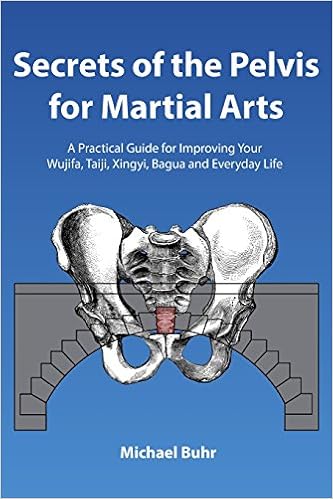
* We talked about my upcoming book which looks at the pelvis as an arch bridge, the sacrum as the keystone, and the difference between bracing and arch. In an arch bridge, no matter where the downward force is applied, the force is transmitted to the abutments, the feet. With a brace, there is strength only in line with the brace.

* Question: If tension determines the limits to which I am able to relax, then can stretching, like in yoga or physical therapy, increase the extent to which I can allow relax?
Answer: No, because stretching stretches the healthy belly of the muscle and does not necessarily result in relaxing the full length of the muscle. A tense muscle doesn't necessarily mean that the entire length of the muscle is tense. Areas can get bunched. Stretching may hyper-stretch that part of the muscle that can stretch while the injured or tense part remains stuck. It's better to work to the functional movement desired and the muscle will naturally respond as it can.

* A stance practice for me. Take three breaths and with each exhale say, "It's Ohhhhh Kaaaa-eeeee. (O.K. - acceptance)" Continue until I feel the "in-body" feeling. When I did this in class, I get a soft, relaxed, present, feeling. Feeling without words to describe what I don't know. Not knowing and accepting. Feeling. Experiencing. Submitting to the experience as I did in class today without thinking, analyzing, critiquing is a huge change for me! Being soft and relaxed in the lower belly makes it easier to notice.

* I'm noticing that there's a difference between: Belly tight. Belly relaxing tightness. Belly relaxed-soft. The latter two look the same externally but internally the feeling is completely different. Belly-tight is the "six pack abs" look. It's kind of like tense muscles can relax but they can't be soft and in finding softness, muscles can be strong without being tense.

Further reading:
Introductory article explaining this "Journal Notes" series: Zhan Zhuang Training Journal
Previous article in this series: Habits, Patterns, Blockages: Journal  Notes #108
Next article in this series: - Feeling in My Eyes: Journal Notes #110