Sunday, December 21, 2014

Vertical Kua Exercises: Journal Notes #128

Notes from my November 2014 Zhan Zhuang Training Journal. I train with The School of Cultivation and Practice which practices Wujifa.

Notes from 11/03 class

* Question: What's the difference between paying attention and being aware?
Answer: The body response is different.

* Sing the ABC song. Stop at "C". What's next? If you said "D", then you are stuck in a pattern. "D" does not have to follow "C". My beginning singing the song recalled for you a pattern. The fact that you responded to the pattern suggests your predisposition to patterns instead of spontaneity.

* To get to "When one part moves all parts move", you need to first isolate the parts to get the individual parts to move and then go back and reconnect the body in a new way.

* I match to a superficial level of awareness. I need to recognize that and figure out how to go deeper.

* The "hip swivel" exercise is a component of the "side to side" exercise.

* Question: I've been working on doing the "hip swivel" exercise. How does this look?
Answer: Show me. Terrible. You're using too many muscles.

Me: I can't feel that I'm moving. I feel like I'm standing still. Where am I moving?

Response: My instructor and school brother then held my body in place as I did the exercise and I felt a stillness in my body I had not felt doing this on my own. You're muscular neuropathways have mapped an inappropriate level of muscular engagement. You don't know how to turn off the muscles you don't need to do a simple exercise.

* Question: I've been practicing the mini-breathing squats with pressure. How am I looking?
Response: Show me. You're still being too mechanical. The mini-squat exercise is about maintaining equal pressure in the lower abdomen with different "distortions". Think of a round balloon resting on the floor. Now think of a flat surface on top the balloon pressing down on it. What happens? It distorts its shape side-to-side but the pressure remains the same. In the mini-squat exercise, there are three distortions: up, down, and bow.

Look at mini-squats another way. (He stretches and holds a theraband against his upper right chest and  left leg quad. What happens when I squat? The band relaxes. What happens when I stand upright? The band stretches. What you see the theraband doing is what you want to feel happening under your skin with the pressure of your breath initiating your movement.

* Question: What should I focus on practicing? The hip swivels or the mini-squats?
Answer: The method is not the truth. The mechanical exercise is not the point. Practice being more aware of the more subtle. Move more slowly and evenly with the breath as a driver. Use the hip swivel to relax the hip but put more time into the mini-squats. Think of the exhale as being like a pressure cooker blowing off steam as a result of the increased pressure caused by squatting.

* Use your intention to help focus your awareness on the pressure. Focus, awareness, and intention mutually develop each other.

* Start in Wuji. Stay in Wuji. Don't go to Yin Yang.

* With pressure you learn the meaning of movement in stillness. The pressure remains the same (stillness) even though the body is "distorting" into its various shapes (movement) - just like squeezing a balloon.

* Question: When I do the laying down exercise (where the legs move out with the in breath and move in with the out breath), I can feel the lower abdomen breath pressure push the legs out but I can't feel the decrease of pressure pull them in.
Response: Lay down. Show me. Then he leans over me. Breathe in. Good. And now breathe out. (As I breathed out, he pushed down on my lower abdomen.) Feel that?

Me: Yes. I feel a kind of pulling on the inner thighs.

Notes from 11/16 class

* My school brother has been working on a new exercise to develop the feeling of vertical fascial stretch from quads, across the dan-tian to lower ribs. I inquired about the feasibility of my practicing this exercise. Here's what transpired....

I knelt on my hands and knees. A short broom handle was placed along my spine. I was instructed to bring my spine in contact with the broom handle. My torso was secured (as best it could be) to this broom handle. Next, I was instructed to get up into a kneeling position being mindful of maintaining contact with the broom handle all along my spine.

With my knees and shoulders on a "plumb" vertical line and adhering to that line, I was instructed to focus on relaxing and maintaining contact with the broom handle as my pelvis was pushed forward from behind. My torso pivoted on my femur heads.

"Look!" my instructor exclaimed, "There's the vertical fascial stretch!"

"I can't feel it!" I said with frustration.

With this, my school brother took over assisting with my pelvic movement. My instructor grabbed his camera and took a photo of my three point (shoulder, pelvis, knee) vertical/relax posture and then another picture of my pelvis forward/vertical fascial stretch posture. When I looked at the photos, I was amazed! I could clearly see the stretch from my quads into my lower chest! However, I could not feel it.

With this, I was unbound from the broom handle and attempted this seemingly simple exercise on my own without any props. I immediately did it completely wrong!

Kneeling Vertical Kua Exercise rough sketch
Kneeling Vertical Kua Exercise (rough sketch)

The main problem was with my lower back arching. I was given the broom handle to hold against my back. I tried again. I struggled with figuring out the coordination.

"Don't tense your abs. See how he is using his abdominal muscles to get the back to flatten? Don't do that. Relax the back relax the front. Now push your penis forward!"

"Why do you have to make this about the penis?" I asked.

"Because it's not about the belly. Look. (He got on his knees and demonstrated the exercise.) Here's pushing the belly forward. Now here's pushing the penis forward. See the difference?"

"Ah! Huge difference! Pushing the belly forward comes from arching the back which allows the hips to stay locked. Pushing the penis (or pubic bone) forward requires mobilizing the entire lower abdomen area."

"Exactly! Now try again!"

I tried but I am so tight and I have so little control over that area that the best I could do was maybe move forward a millimeter on my own.

"Ah! That's good! Practice there!"

"But I hardly moved!" I whined.

"Do you want to do it right and make progress or do you want to do it wrong and fool yourself? Remember, you are where you are and that's where you start."

Notes from 11/31 class

* These last two weeks, I've been practicing the mini-squats and trying to get a better feel for the squatting coming from de-pressurizing rather than a coordination of breathing out and squatting. During these two weeks, the following ideas occurred to me:

* Question: What's the difference between holding and pressure?
Answer: Holding is a faux pressure. They can feel similar but are not.

* Question: When I inhale into my lower abdomen, should I focus on pushing out from the center only or should I focus on expanding all directions?
Answer: You're thinking from a yin-yang perspective. No. Don't focus on any direction. Simply allow the lower abdomen to expand on the inhale. (At this point he demonstrated by stretching a small section of theraband over his mouth and blowing into it.) What happened? It all expanded. Do that. Don't over-complicate it. Just do the exercise.

* Question: Is deflated the same as limp? If I completely "depressurize" it feels limp in comparison.
Answer: They are similar but not the same.

* Question: What's the relation (if there is any) between pressure and connection?
Answer: Pressure is just a method. (Chinese use the concept of ch'i as a way to talk about pressure.) You don't need to use breath to get fascial stretch. Fascial stretch is a type of pressure. When you use your breath, you can notice certain movements. You can notice biotensegrity distortions without muscular tension. If you get stuck on abdominal breathing or reverse breathing, then you are stuck in kindergarten. In biotensegrity/Wujifa, there is only movement. The teeter-totter is yin-yang. The fulcrum is outside the teeter-totter. When you apply martial intention to this, then you have internal martial arts.

* Question: I notice the lower abdomen pressure extending into my upper legs and creating a downward pressure like there's more weight dropping. Is this a strategy to help get the weight to sink?
Answer: You're creating an illusion with your intention.

* Question: When I'm standing in zhan zhuang, should I breathe to maintain pressure; to not deflate?
Answer: Don't worry about it. Breathing is a strategy. Just stand and relax.

* Question: Is pressure the "charge"?
Answer: When pressure and armor come in contact, then you get vibration. "Charge" is the amount of gusto for life that you have.

* Question: Is flaccid the same as no or low pressure?
Answer: Yes, in Wujifa, we would consider these similar.

* Remember, in Wujifa, the "dan-tian" is the entire area from the bottom of the ribs to the mid-thigh. This area is the most difficult to let go, to release, to stretch, to pressurize and to feel connection in and through. It is the area which holds the most challenge and demands the greatest amount of focus and work.

Further reading:
Introductory article explaining this "Journal Notes" series: Zhan Zhuang Training Journal
Previous article in this series: Remember, The Moon Is Round: Journal Notes #127
Next article in this series: Gaining Clarity on the Training Methodology: Journal Notes #129

Saturday, December 13, 2014

Where Are You on the Robot-to-Human Scale?

Here's one of those fun online surveys that fits really well with the theme of this blog and the practice of internal gongfu.

Do you have any emotions

In this forty item survey, you are instructed to check each item that "makes you feel something, anything." The listed items include a mix of situations and references to movies or other stuff you might see. Depending on the number of boxes you check, you'll fall into one of these four categories:

You are an emotionless robot. You’re barely human, and basically don’t care about anything. I’d say you should be disappointed, but you wouldn’t even feel that.

You are pretty emotionless. But some things will penetrate your cold, dead exterior and make you engage with humanity.

You are pretty emotional. Most things will penetrate your shell and you’re generally happy with the world.

So emotional. You are so emotional. You’re continually excited, or sad, or just feeling all the feelings. Literally anything you see makes you feel something. I’m not sure how you function.

And here's how I would interpret these categories in terms of learning internal gongfu:


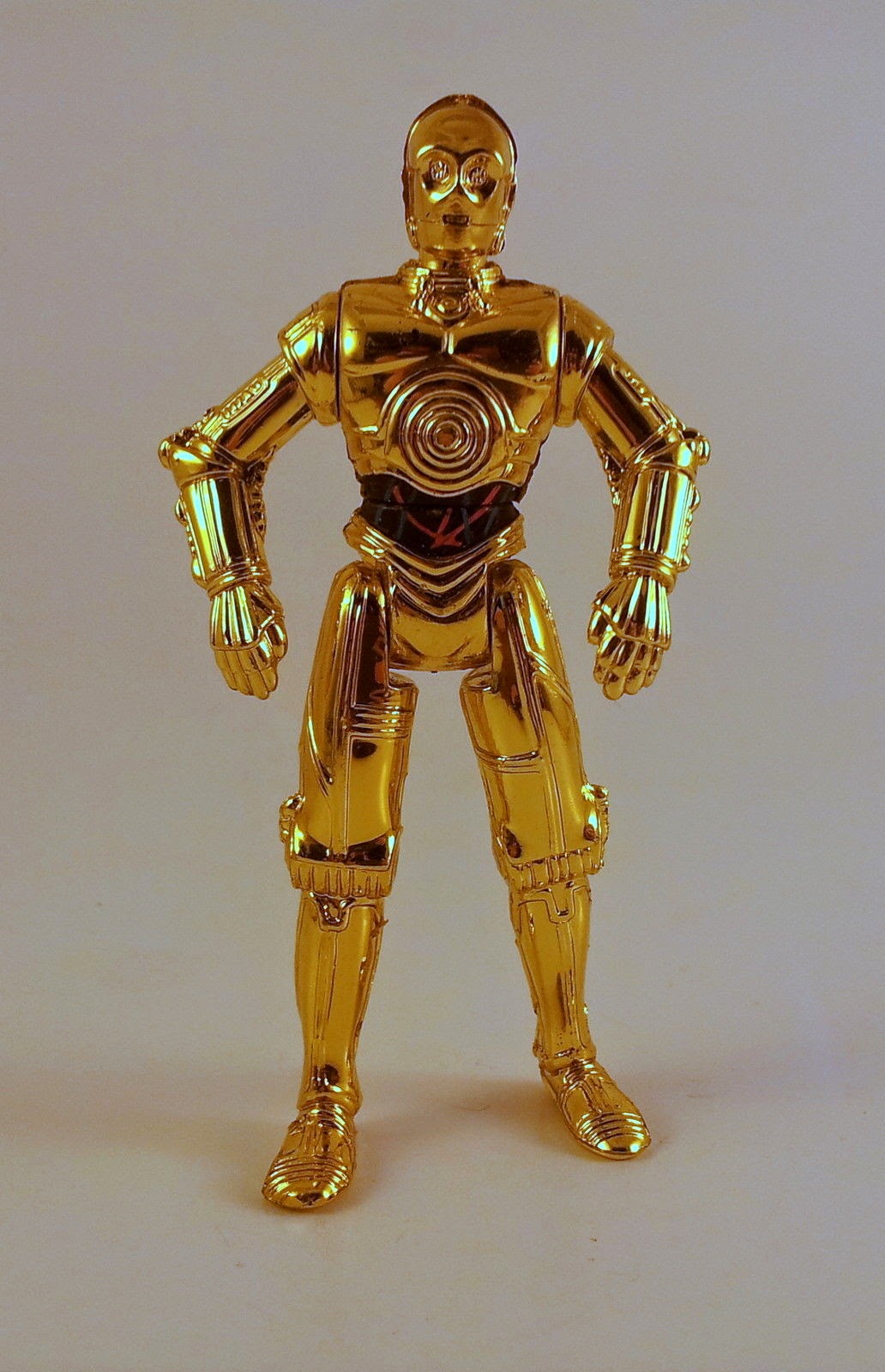
C-3PO robot man
You are an emotionless robot.  You are probably also numb to any bodily kinesthetics outside of smashing your thumb with a hammer. You should probably pass on this whole internal thing because you'll never get it in this lifetime. You'd make better use of your time focusing on martial mechanics and techniques.

You are pretty emotionless. You can probably feel your muscles like when you are doing physical labor, exercise, or stretching but you are probably numb to anything past this. Developing this internal thing could take you f-o-r-e-v-e-r! You'll need to work on improving both your emotional engagement with life as well as feeling more in your body. Hope you (and your teachers) have lots of patience and perseverance!

You are pretty emotional.  To the extent that you can feel emotion as a bodily reaction, and with proper coaching, you are probably best positioned to make easy progress.

So emotional. You are about as close to being a "natural" as they come. Your biggest challenge will be refraining from giggling from the sheer enjoyment of discovering, "I didn't know I could do that!"

Happy practicing everyone!

Sunday, December 7, 2014

Spirituality: In-Body or Out-of-Body Experience?

I was raised in the Roman Catholic church in the era bridging Vatican II (1962). And so from a very young age I learned that spirituality involved having an out-of-the-body focus. This is in my bones. Despite my "falling away" from the church, two decades of church teachings formed the background that I brought into my early studies of Tai-chi Chuan and qigong.

At one point in my early training, I considered out-of-body spiritual practices and the internal martial arts and qigong practices as being complimentary. I interpreted qi as a kind of spiritual quality. After a long, rough road, I now see how confused I was.

Lynne Forrest wrote eloquently about her quest for enlightenment and spiritual development and the revelation that led to her transition from pursuing out-of-body experiences to pursuing an in-body experience. My understanding is that she now considers developing a deep, clear feeling of connection within our own bodies as a "spiritual" path. She writes, "What if embod­i­ment is even nec­es­sary in order to know God?" (emphasis added). See her June 29, 2011 blog article titled, An In-Body Experience.

I like her article for two reasons:
  1. She did a nice job summarizing this generation's counter-culture spiritual values.
  2. I like how she re-frames spirituality from an out-of-body pursuit to an in-body pursuit and then hits a few key points of the experience of an in-body practice.
Her article provides a wonderful segue into considering how the pursuit of an out-of-body spirituality is completely counter-productive to developing the internal aspects of Chinese martial arts and qigong.

A focus on developing out-of-body-ness at least inhibits and at most negates the prospects for developing in-body-ness.

Except maybe for the highest levels, there is nothing about neigong that is out-of-body. My understanding is that any "out of body" experience is more appropriately understood as connecting between my body and the world outside my body. The "home base" is the body. Of course the presupposition is that I-body is first fully connected internally.

Bruce Frantzis hits on a few of these points throughout his interview with Iain McNay.


For me, the following are the key points of this interview:

8:10; It's not about being "spiritual". It's just good common sense to find out who you were. To most people, this doesn't enter their thought system. We live in a society that is utterly numb. And so much of the spiritual dimension is just blah blah blah blah blah

16:13; To mobilize qi, you have to learn how to really relax. To learn how to relax your muscles is hard enough. Then to really relax your energy, that's really harder.

37:30; What's in your head, if it doesn't translate through your body, you'll never notice it. When you're noticing something going on in your head, you're not noticing your brain, you're noticing your nervous system... how it's hitting your body in different ways.

Even though the interview goes on for over an hour and he does make some points that I understand (at my level of understanding), he also talks about some things that don't resonate with me based on my experience.

The bottom line for me is that it is worthwhile to at least entertain the notion of spirituality as being an in-body experience. This might be a way to help resolve the contention between A) my deeply ingrained religious views which devalue the "in here" in favor of the "out there" and B) my current practice which values feeling and connecting the "in here".

Thursday, November 20, 2014

Musings on the Moral Compass Impediment

When I embarked on this internal gong-fu journey, I never thought I would have my morals and beliefs challenged as being an impediment to making progress. In fact, this is exactly what I've encountered.

Truthfully, I encountered this years ago and at that time I considered the notion at least unreasonable and at most completely insane; in both cases, dismissible. Now, after many years of encountering this again and again, I am beginning to gain clarity in understanding the mechanism of how my rule-based behavior, a.k.a. my "moral code", is embedded in my physical structure. The degree to which I want to "hold onto" this behavior profoundly influences the degree to which I prevent myself from "letting go" and relaxing. In other words, what I am holding onto is preventing me from progressing further.

So in the conversation of breaking the rules, of playing at the boundaries of "moral behavior" I must be clear that I am not talking about breaking any laws of my domicile. What I am referring to is the degree to which I allow or "hold back" my Intention's natural, spontaneous, authentic expression. (As I mentioned in my previous post, "IMA is about clarifying and purifying the body's expression of intention.") The boundaries of the legal system of my domicile actually leave a lot of room for a wide variety of expression of human nature.

Shutting down or holding back any aspect of this expression and then attributing this to my morality as a choice has been an insight long in the making. I'm now thinking that it is not my morals dictating my behavior to me, rather, it is my decision to prevent "ch'i flowing" in, and feeling a deep connection through, a particular area of my body that is the root of particular "moral behavior". For some people this is their voice or their heart, and for others, like myself, this is the pelvic/dantian area.

A good internal gong-fu teacher must be both as compassionate as the Buddha and as impudent as the Devil.
In contemporary American slang, if your teacher isn't "yanking your chain" and "pushing your buttons", that is, if your teacher isn't aggravating you and goading you to look at areas that you would never in a million years dream of exploring from your own initiative, well, then you may never discover your deeper holding patterns.

I think that for many people, our moral compass runs pretty deep. We just know what is right and what is wrong. So obviously, having to face my feelings of doing something that completely goes against what I have always abided by is extremely difficult. It is one of the most challenging aspects of training I have ever faced.

From my own experience, I now see how behavioral patterns that may be considered moral or immoral are built into the body's structure; they are one and the same. Holding onto a moral, ethical, religious, or spiritual belief is *holding*. In a practice where relaxing and letting go are the methods to discovering the principle of connection, holding for whatever reason may be the factor inhibiting further progress.

Is the underlying premise based on holding or is it based on letting go and discovering connection?

What is "the line" that you would never cross? Maybe, that is where you are stuck.

Thursday, November 13, 2014

Remember, The Moon Is Round: Journal Notes #127

Notes from my October 2014 Zhan Zhuang Training Journal. I train with The School of Cultivation and Practice which practices Wujifa.

* At the beginning of this month I had difficulty rolling out of bed and being appropriately attentive for  6:00 AM stance practice so I changed my schedule to stand 30-40 minutes as soon as I get home after work, then dinner, then walk, then more adjunct exercises, then reading. (The adjunct exercises are the laying down lower abdomen breathing with knee movement, mini squats, and weighted pivot on femur head.)

* Question: I've got pain in my shoulder when I let my arms hang at their side, for example, when doing the femur head pivot but they don't get sore when in stance when I have the forearms at a 90 degree angle. What's up with this?
Answer: Show me. When you do your stance, you are slightly tensing and raising the shoulder and when your arms hang, you're rolling the shoulder forward and slightly hunching.

(Me: At this point my instructor gave me structural adjustments: pinched the scapula together and told me to forcefully use my rhomboids to pull my shoulders down. He pushed down on my shoulders as a prompt.)

Notice how your hands rolled out. Keep your shoulders there and flatten your palms against your legs. Head back and up. Now, use proprioceptors to notice where your body parts are. What do you feel?

Me: I feel a stretch from the feet through the kua and a strong stretch up and down the front of my torso.

Instructor: Good. Now, roll your shoulders forward a little like you had them before. What do you notice?

Me: The feeling in the kua lessens. It's harder to feel.

Instructor: You won't get a good feeling in the kua if the structure of the shoulder is wrong.

* Many people say the internal martial arts are based on intention but they seem to not explore the depths of what this means functionally. IMA is about clarifying and purifying the body's expression of intention. IMA is about finding the true expression of who you are; the purest expression of your intention. If you lie and deceive others, e.g., you are shrewd, then you probably lie and deceive yourself. If you lie to yourself, your body gets confused about the expression of intention. You say that you want to calm the muddy water but your intention really is to continue stirring the muddy water.

* The Daoist Sage lived with integrity and connection. When you try to "game the system" or go against your natural character, then you build an armor over your natural character. Armor shows up in the body as tension. Tension is an armor against allowing free flowing natural expression. Tension protects you against experiencing "qi-flowing". Is that what you're afraid of?

* Don't judge others. It's OK to be hypocritical. Be honest with yourself. Believing you are upholding one standard and then doing something contradictory and then rationalizing that behavior is counterproductive to developing "song".

*  Hypothetically, it should take someone, with no previous experience at all, two to three years to get a feel of relaxed connection and maybe to fa-jing. The problem is that by the time people get to this level, they've got years or decades of experience that they want to make this fit into. It simply cannot be done! Therefore, most of the gong-fu  involves undoing bad habits and cutting through resistances to that which the person dedicated time and energy; the armor of pride.

* WUJIFA is not the finger pointing at the moon. The methods are the finger; the guide. Wujifa is the moon that the methods are guiding you toward. Remember, the moon is ROUND. And ROUND in Chinese is kind of a cultural code word for "connected"! Methods guide you to feeling connection! The full, round moon is a symbolic reminder of what you are striving towards; striving to develop the feeling of completeness, fullness, connection.

* When people do reverse breathing they tend to hold muscles already in chronic tension. Thus, people who think they are doing an advanced breathing technique are in fact fooling themselves. You cannot do reverse breathing correctly until you get complete freedom of movement through the abdomen and kua area.

* In Wuji, it's not about yin-yang. It's about what you feel! When you get in the mindset of open-closed, front channel-back channel, tight-loose, etc., then you'll never be able to develop the speed that comes with connection; when the whole body moves as one. When you get present and get connected, then you're on a different path than the yin-yang people. Wujifa is a system to get you unstuck and out of the yin-yang rut.

* Be attentive to feeling the juiciness, the sauciness, the sensuality of your body. Mmmmm.. on inhale and recall a favorite scent or smell that takes you back to a lovely, happy time. And Ahhhhhh on exhale with the relaxed exhilaration of that wonderful memory.

* Notice those situations and moments when you shut down your natural sensuality. For example, you smell your favorite cake and you feel an urge for cake but (due to dietary restrictions) you tell yourself, "I shouldn't have cake." or "Cake is bad for me." and you fight the feeling or depending on your "will power," you kill the feeling. Or you make others wrong for eating cake so you don't feel bad about wanting cake. There are many variations of stories we tell ourselves many of which result in shutting down the very connection to feeling we want to build up.

* Question: How did you develop the ability to see into the body to the depth you are able?
Answer: I worked five years at B.W. Clinic. When a patient came in, I'd look at his/her body. I'd then ask myself, "How does that feel in my body? I'd then try to replicate their structure in my body. Then I'd ask myself, "How can this be resolved to ease?" I then followed my intuition. This is in contrast to the clinical mechanical application of techniques that many massage therapists follow which will never lead to developing this ability.


* Do you remember the exercise I described in my September notes Journal Note #126 where I talked about placing my greater trochanter against an immovable object? Well, after proudly showing my instructor this wonderful weighted hip-swivel exercise and having him point out how my body was responding, the bottom line is that such an exercise is the wrong path and I would make better progress this way:
  • Go to a hardware store and purchase a small (3" or 4") lazy susan turntable bearing plate.
  • Get into standard Wujifa zhan zhuang stance position. Put the bearing under one heal.
  • Shift your weight to the side opposite the foot on the bearing.
  • Now, use the minimum amount of muscle needed to slowly turn the knee as far inward and as far outward as possible swiveling on the bearing. Do several reps.
  • Repeat on the other side.
  • Practice to develop less and less amount of muscle needed to get movement. Really feel into the hip socket! Try to keep the rest of the body as still as possible.
* Question: How should I practice this and how long each practice session?
Answer: Based on your hour a day practice (30 minutes of stance and 30 minutes of adjunct exercises) and your every-other week class attendance, work up to adding only five ounces of weight onto the swivel after two weeks.
Why? Why so little and why so slow?
Because your tendency still is to muscle the exercises and this sets up the wrong pattern in your body. You're still using tension to notice the feeling of connection (this is the faux connection) and you want to find the feeling of connection in relax.
* At one point in the above discussion, which lasted nearly an hour, my instructor unashamedly demonstrated (through acting out) how my musculature responds to adjustments to stand with a more relaxed structure. He acted out a guy with a fearful face, with gasping breathing, ducking and dodging imaginary threats and incoming attacks. It was quite a vivid display.

I was shocked! "You know, all this is under my radar! I don't notice this at all!"

He said, "I know. You cannot notice your own armors. You need someone to notice them for you."

Because I am that, I cannot notice that my body responds this way. And yet, he and my other school brothers have all commented that when they lay hands on me and feel my structure, this is indeed an accurate portrayal of how my responding musculature feels to them. Even though I believe and I feel I am relaxed, yet they notice something else entirely.

* Some so called "internal practices" are in fact a combination internal-external. This means their power is derived from bracing (external) and White Crane (done "internally", that is, driving from the chest). Contrast this with full internal where there is no bracing and there is whole body connection driven from the kua. The internal-external practices can develop power quickly and therefore are the most popular.

* I've been experiencing an extenuated noticing of feeling in my hip joints as I walk/move.

* When people with a normal/usual level of  body awareness get their first sense of body awareness, they will label their experience "Body Awareness" without any sense or feeling of the gradations or levels and assortment or variety of kinesthetic feelings awaiting them. For these folks, breaking the surface is so different from their normal everyday lives that this experience gets labeled as if body awareness were like an Off/On switch and they "got it".

* I now understand the meaning of "Breathing is a method" as meaning that the breath can be used to exercise intention by "directing" it within the body. It is also a method to help liberate stuck parts of the body, for example, "breath into the kua" directs my awareness to my kua and by involving my breath, further reinforces and deepens my "body awareness", that is, my internal proprioception skills in a manner that also helps to get these parts moving.


Further reading:
Introductory article explaining this "Journal Notes" series: Zhan Zhuang Training Journal
Previous article in this series: Exercise for Kua Freedom of Movement: Journal Notes #126
Next article in this series: Vertical Kua Exercises: Journal Notes #128